Grounded in reflection. Oriented toward action.
When we bring people together, something different should happen. We should be learning from each other. We should shift our perspective. We should figure something out that we can’t do on our own. My job is to create the environment for you and your team to do that.
I do this by holding to four guiding principles:
Better conversations lead to better decisions. Most organizational challenges aren't solved by one person having the right answer. They are solved when people are able to think clearly together. My role is to create the conditions for those conversations to happen.
The environment shapes the conversation. Where and how we meet influences what becomes possible. A thoughtfully designed retreat, a walk through the woods, or even a well-facilitated conference room can change how people listen, reflect, and solve problems together.
I trust curiosity more than certainty. When people become attached to being right, conversations stop moving. Curiosity opens the door to new perspectives, stronger relationships, and solutions that no one person could have developed alone.
Complexity requires humility. The most important leadership challenges rarely have simple solutions. Rather than forcing certainty where it doesn't exist, I help leaders and teams slow down, make sense of complexity, and take thoughtful next steps together.
And sometimes, the best place to do this is outside.
The outdoors as a place to think differently.
Research increasingly supports what many of us have experienced firsthand: time in nature can restore attention, reduce stress, and encourage more creative and flexible thinking. Walking side by side also changes the rhythm of conversation in ways that make it easier to listen, reflect, and explore difficult questions.
If you are interested in taking your off-site outdoors, I partner with Cairn Leadership Strategies, a leadership development company that uses the outdoors as the catalyst for effective change, to offer challenging experiences outside.
A few examples of how I work
-
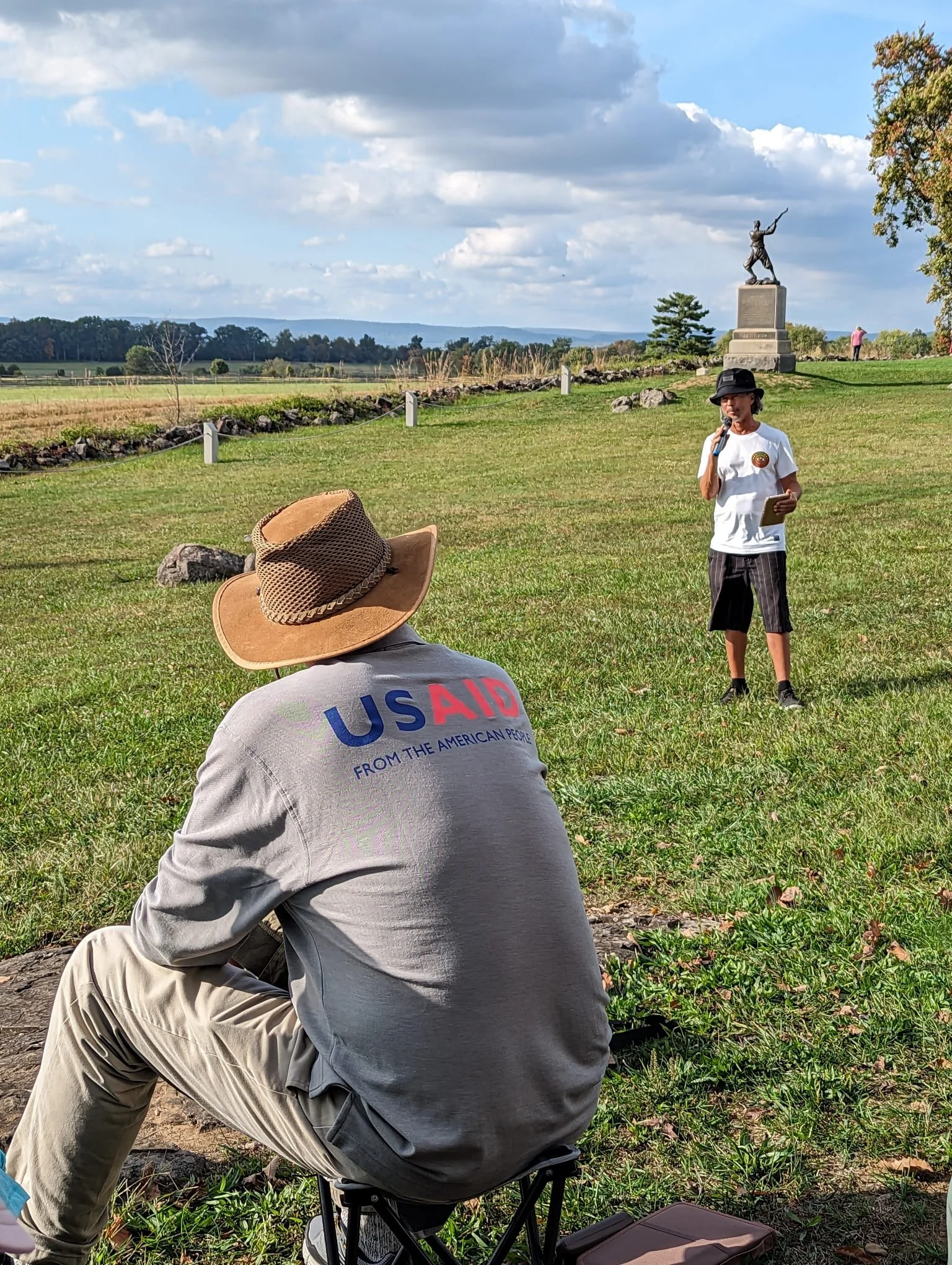
Humanitarian leaders routinely make decisions in environments of uncertainty, where the consequences extend far beyond the immediate crisis. These leaders coordinate disaster responses, manage refugee crises, and make decisions under extraordinary pressure. So, these leaders didn’t need to know more leadership frameworks; they needed some space to reflect on their own leadership - examine how they’ve showed up, recognize where they succeeded, and decide how they wanted to lead in the future. So, a few times a year over three years, I facilitated a leadership development program in Gettysburg, Pennsylvania that used history to examine responsibility, judgment, and the human consequences of leadership.
Rather than treating Gettysburg as a military history lesson, we explored it as a complex humanitarian crisis. Yes, we examined the decisions of military leaders, but also heard the stories of civilians, like Abraham Brian and Lydia Leister, people lost their homes because of decisions made by others with more power.
Walking the battlefields was important because it gave us the time and space to wrestle with hard questions.
Questions like:• Who isn't in this room?
• Whose perspective are we missing?
• What unintended consequences might our decisions create?
Those same questions continue to shape how I facilitate leadership retreats, coach executives, and help organizations navigate complexity. My role isn't to arrive with the answers. It's to help leaders ask better questions, understand the system they're working within, and make decisions they can stand behind together.
-
In 2024, I facilitated a weeklong workshop bringing together leaders from Nigerian government agencies, U.S. government partners, and international development organizations to rethink Nigeria's emergency management system.
These groups often don't operate on the same timeline, answer to the same funders, or define success the same way. A government official might think in terms of sovereignty and long-term capacity. An aid organization often thinks in terms of speed and access. None of that is wrong. It's just not the same thing.
A lot of times, we just ask people to set those differences aside for the sake of collaboration. But I don't think that actually works. The differences are real, and they're not going away by the end of a week. Rather than asking people to set those differences aside, I designed the workshop to make them visible. Once people could see where their assumptions, incentives, and responsibilities diverged, they could begin identifying where genuine alignment existed.
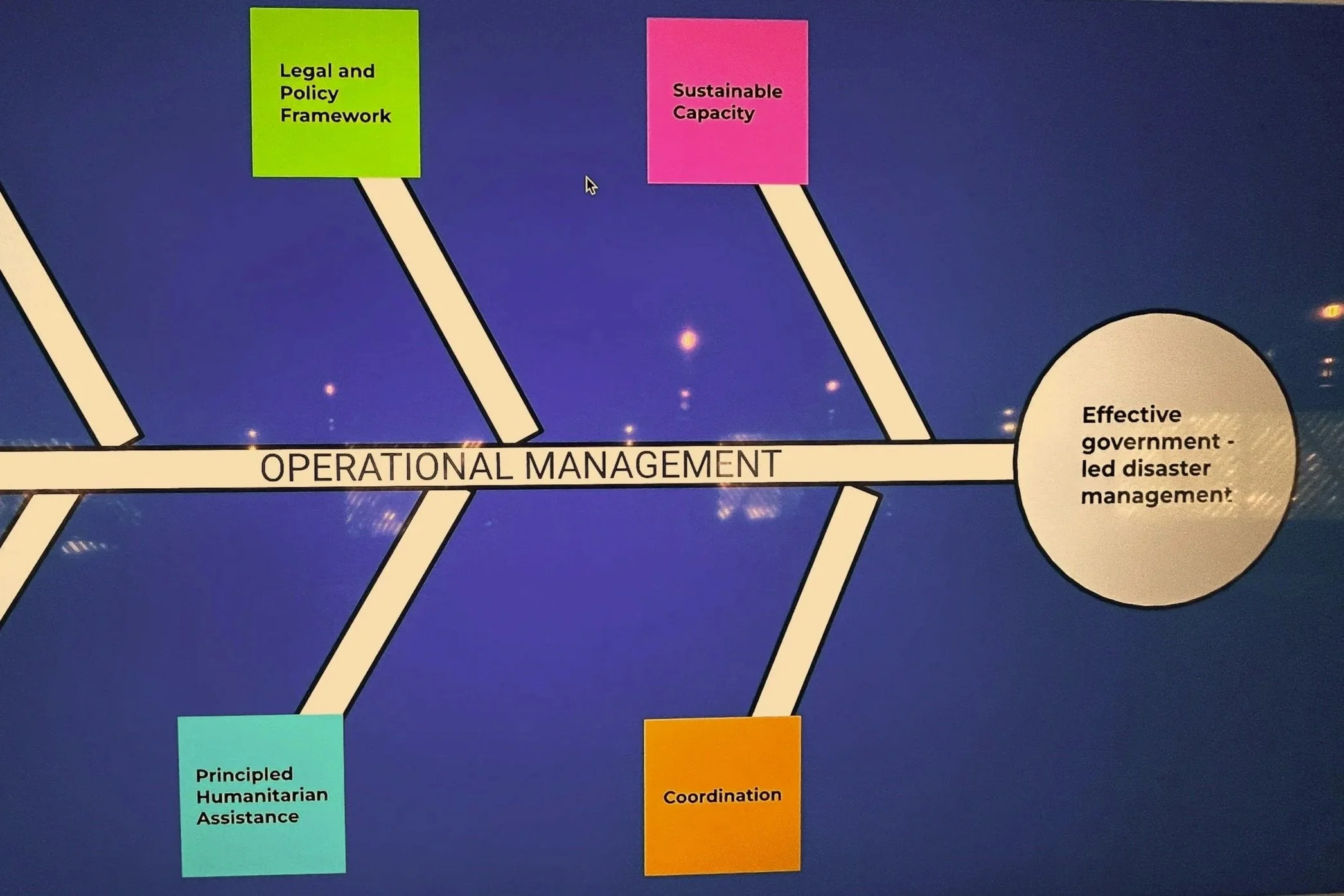
To do this, I used structured facilitation techniques, like the Ishkawa diagram, to slow the conversation down and help participants examine assumptions by asking questions like:
• What problem are we actually trying to solve?
• Where do our goals truly differ?
• What becomes possible if we stop looking only through the lens of our own organization?By the end of the week, there was a palpable shared willingness and excitement to try something that hadn't been on the table before.
A pilot project idea for one Nigerian state emerged - using a different approach to disaster management than what had been tried before. That outcome wasn't the result of reaching perfect agreement. It emerged because participants developed a shared understanding of the problem—and enough trust to explore a different way forward.
-
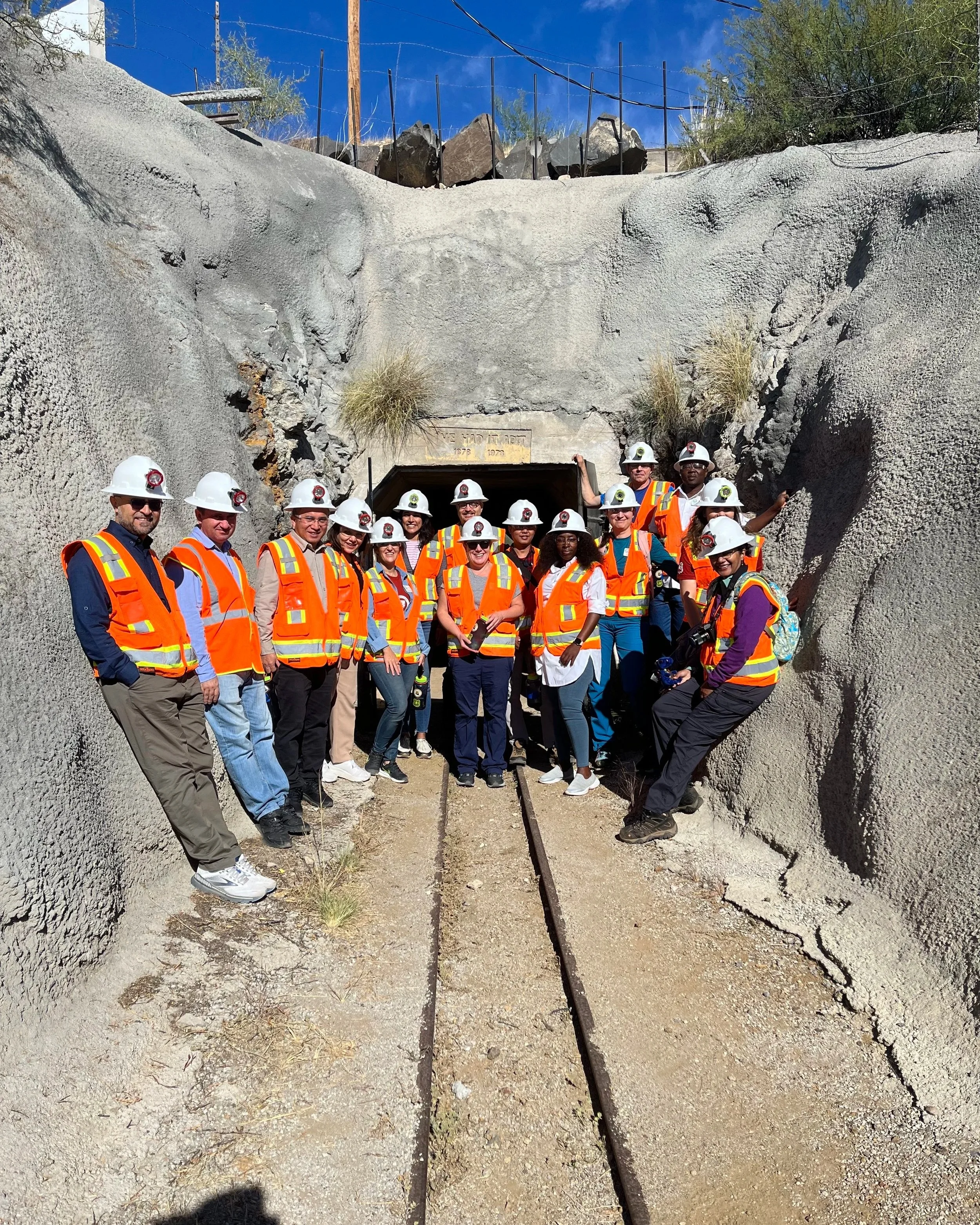
In 2023, I partnered with the U.S. Forest Service to facilitate a two-week leadership seminar with international mining experts exploring a difficult question: How can governments, communities, and the mining industry work together to ensure mining is safe, legal, and creates lasting benefits for everyone involved?
Rather than keeping the conversation in a conference room, we spent two weeks traveling across Arizona. We met with government officials, mining companies, Indigenous communities, and residents whose lives were directly shaped by the mining industry. We walked through mining sites, hiked in the Sonoran Desert, shared meals, and spent time listening and working to understand the context people where operating in.
Being in these spaces helped us understand the problem from perspectives we maybe hadn't considered before. An environmentalist reconsidering his opposition to a mine in the U.S after hearing about how copper is mined in Africa. A west African government official motivated to hold mining companies more accountable after hearing how a small town Arizona mayor forced herself into conference rooms in London.
Conversations became less about defending positions and more about understanding trade-offs. Participants saw both the environmental consequences of mining and the serious, long-term work many companies undertake to reduce those impacts—even decades after a mine closes.
This experience reinforced something I continue to believe today: things are complex and most people are doing what they think is best. Changing approaches, broadening perspectives happens when we have the opportunity to encounter complexity firsthand, listen to people whose lives are different from our own, and wrestle with perspectives that don't fit neatly into our existing worldview.